
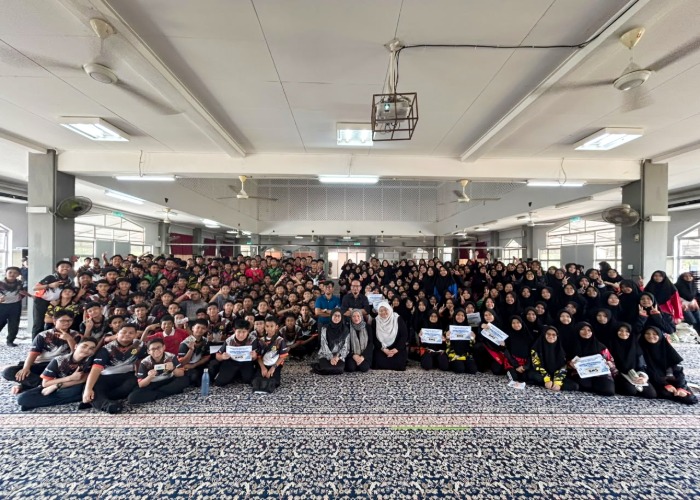
SPEAK UP AND SPEAK OUT WITH MRSM TUN ABDUL RAZAK STUDENTS
PEKAN, 14 September 2026 – What happens when students hear a language they do not understand? Do they remain silent, wait for an explanation, or take the initiative to make sense of what they hear?
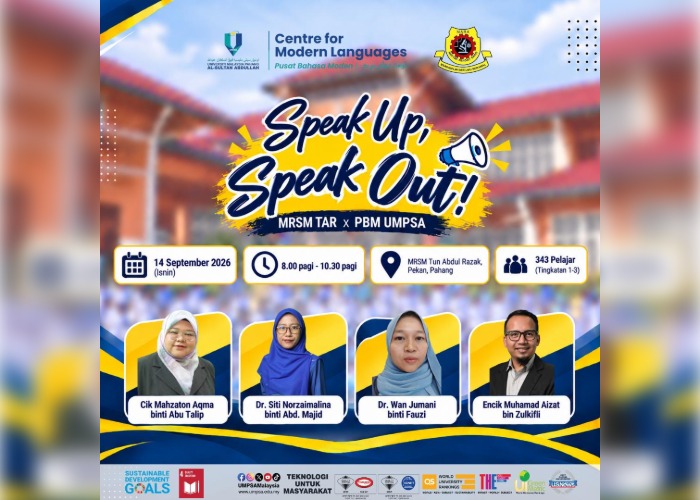
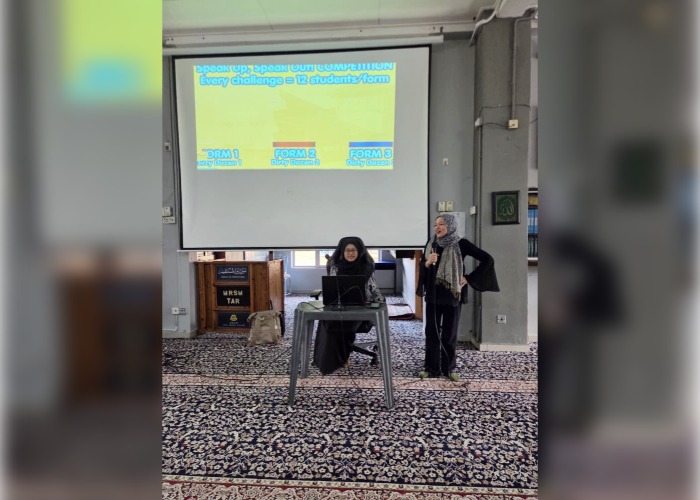
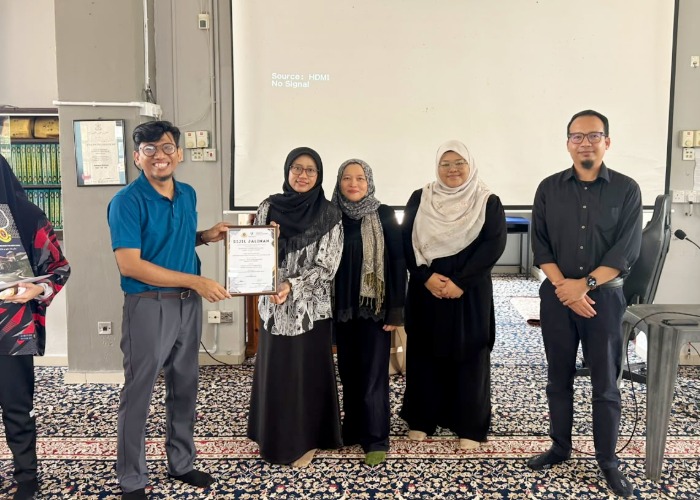
A total of 343 Form 1 to Form 3 students took on this challenge during the Speak Up and Speak Out programme at MRSM Tun Abdul Razak, Pekan, on 14 September 2026. The programme was conducted from 8.15 a.m. to 10.30 a.m. and facilitated by staff from Centre for Modern Languages (CML), namely, Dr. Wan Jumani, Dr. Siti Norzaimalina, Mahzaton Aqma and Muhamad Aizat.
Rather than approaching communication as simply a matter of speaking correctly, the programme explored a broader question: What does it take to communicate with confidence, especially when we are unsure? This programme was designed as an interactive language programme that provided students with opportunities to communicate, express opinions, provide supporting reasons, and present recommendations in a supportive environment.
The programme began with Lost for Words, where students were unexpectedly addressed in Korean by CML Korean teacher Mahzaton Aqma, without an immediate translation. The activity encouraged students to interpret the unfamiliar language through contextual cues, facial expressions, and gestures. It also highlighted the importance of taking the initiative to communicate, even when faced with uncertainty.
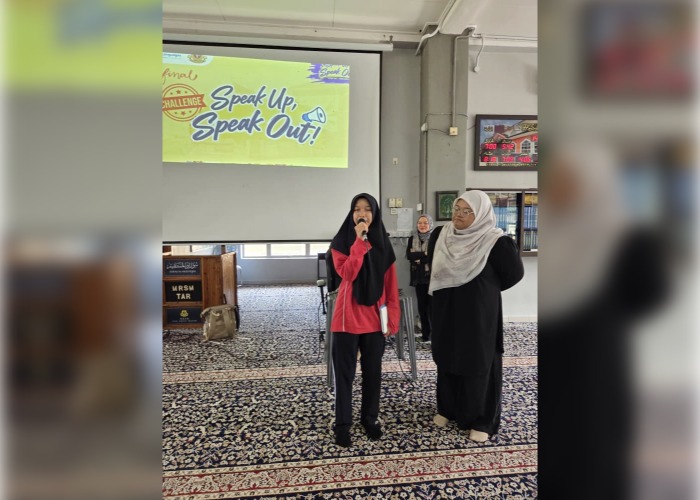
The session then progressed to first English session, Pick a Side, where students responded to simple, familiar choices such as “Tea or Coffee?” and “Chocolate or Vanilla?” This low-risk activity encouraged students to express their opinions confidently without fear of making mistakes. In Tell Me Why activity, students learnt to support their opinions with reasons and examples. They then moved on to Make Your Case, where they practised organising their ideas and persuading others through clear and convincing arguments. The programme concluded with The Recommendation Challenge. In this final activity, selected student representatives worked in groups to address a given situation and present their recommendations to the audience. The activity provided an opportunity for students to apply the communication skills developed throughout the programme, particularly in expressing their positions, justifying their views and presenting recommendations confidently in English.
The programme also incorporated a Korean language session through Beyond English: Dare to Try. Students were introduced to selected Korean expressions and challenged to move through the learning process of Hear → Guess → Learn → Try → Use. The session provided an opportunity for students to experience how communication in an unfamiliar language can develop through curiosity, active participation, and willingness to try. Students who had initially struggled to understand the unfamiliar language were subsequently able to recognise and respond to it, providing a meaningful demonstration of their learning within the two-hour programme.
The program coordinator, Ahmad Fitri bin Abdul Malek from MRSM Tun Abdul Razak said, “It was encouraging to see that the students were having fun throughout the activities. At the same time, they were learning to speak up and speak out, express their ideas and communicate with greater confidence.” The students also responded positively to the programme. According to first former, Izz Irfan Aisy bin Mohamad Zakaria, “The activities were exciting and different from what we expected. This program helped us learn how to express our opinions, provide reasons to support our ideas and speak more confidently in front of others. It was fun!”
The Speak Up and Speak Out programme concluded at 10.30 a.m., marking the end of a session focused on developing students’ communication skills and confidence. It is hoped that the programme will encourage students to express their ideas confidently, communicate with clarity, and embrace mistakes as part of the learning process. By applying these skills in their academic pursuits and everyday interactions, students can take meaningful steps towards becoming more confident and effective communicators in any language.
Prepared by: Dr Siti Norzaimalina Abd Majid, Dr Wan Jumani Fauzi