
HOW A VIRTUAL GLOBAL CLASSROOM TRANSFORMED TVET LEARNERS’ WRITING SKILLS
KUANTAN, 13 May 2026 – Many TVET (Technical and Vocational Education and Training) students find academic writing to be disconnected from their hands-on technical training. A lack of interest in improving writing skills can be a significant impediment to tertiary-level success. However, a recent cross-border collaboration between Universiti Malaysia Pahang Al-Sultan Abdullah (UMPSA) and Mae Fah Luang University suggests that the right virtual learning design can change that, even over 2,400 kilometres.
The ULE1352 (Essential English) course at UMPSA's Centre for Modern Languages is primarily intended for Bachelor of Technology students. While these students excel in practical and technical domains, opinion essay writing, which is considered a critical skill for academic advancement and professional communication, frequently fails to engage them. The main challenge is to make structured opinion writing feel relevant, compelling, and interconnected.
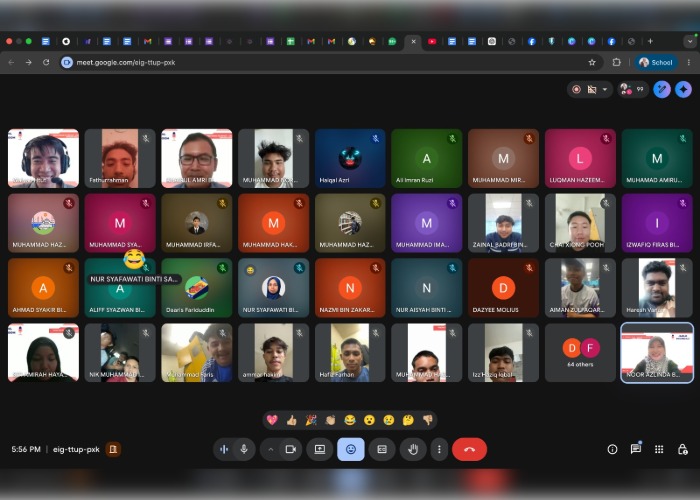
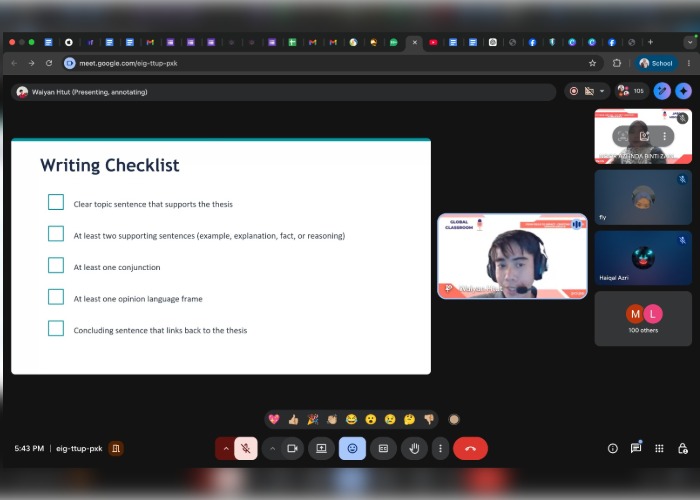
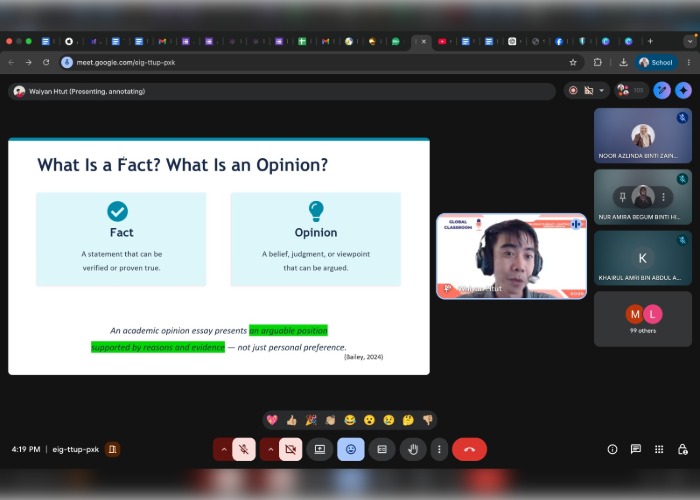
Under the supervision of UMPSA's Flexible Learning and Micro-Credential Centre (FLEXMC), the Global Classroom initiative brought together 72 TVET students from two campuses for a session titled "From Ideas to Impact - Crafting Effective Opinion Essays." A distinguished guest lecturer, Mr Wai Yan Htut, from Mae Fah Luang University in Chiang Rai province, led the session. He was assisted by a group of UMPSA English Language Department instructors who co-facilitated the virtual environment. During the session, the invited lecturer demonstrated how to turn a vague opinion into a clear thesis statement, and then into an evidence-based paragraph. Throughout the session, students followed along and submitted draughts. Instead of abstract topics, students responded to prompts on topics derived from the Sustainable Development Goals (SDG).
Students' feedback indicated strong learning contentment, with one noting that the interactive nature of the discussion provided an important platform for sharing ideas, significantly deepening their understanding. Other students suggested that bringing in more international educators would enrich the curriculum by providing students with a broader cultural lens. Importantly, students actively participated in answering questions and providing virtual feedback, demonstrating a level of real-time engagement that many purely asynchronous courses struggle to achieve.
Ultimately, the UMPSA-Mae Fah Luang University global classroom collaboration demonstrates that virtual exchanges can be more than just cultural exhibitions. They can also directly address major pedagogical gaps in TVET writing teaching instruction. Students left with not only improved essay structure skills, but also with the understanding that opinion essay writing can help them amplify their technical voice.
Prepared by Nur Syafawati Sabuan and Noor Azlinda Zainal Abidin